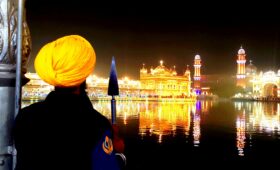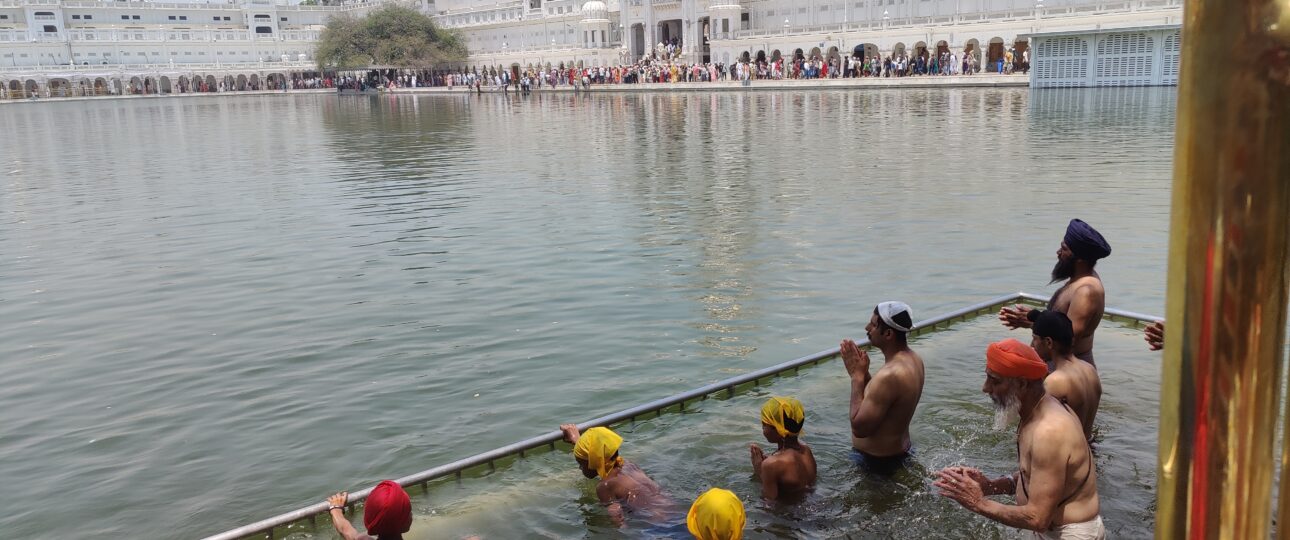
Your complete, practical guide to visiting Amritsar — covering the best time to visit, 1-day itinerary, dress code, transport, hotel recommendations, onward travel to Dharamshala, McLeod Ganj, Chandigarh & Shimla, and much more.
Contents
1. Why Visit Amritsar? {#why-visit} 1
2. Best Time to Visit Amritsar – Weather & Seasons {#best-time} 1
3. Where to Stay in Amritsar: Best Areas for 2 Nights {#where-to-stay} 2
The Old City / Golden Temple Area. 2
Ranjit Avenue / Mall Road / Green Avenue Area. 3
4. Hotels with Gardens, Terraces & Outdoor Spaces {#hotels-gardens} 3
5. Golden Temple (Harmandir Sahib): Everything You Need to Know {#golden-temple} 4
What to See Inside the Complex. 4
The Langar (Community Kitchen) 5
Practical Visitor Information. 5
6. Best Time to Visit the Golden Temple to Avoid Queues {#avoid-queues} 6
7. Golden Temple Dress Code & Visitor Rules {#dress-code} 6
8. Car Parking Near the Golden Temple {#parking} 7
9. Amritsar 1-Day Itinerary: Golden Temple, Jallianwala Bagh & Wagah Border {#itinerary} 8
10. Wagah Border Ceremony: Timings, VIP Passes & Getting There {#wagah-border} 9
What Is the Wagah Border Ceremony?. 9
11. Taxi, Uber & Ola in Amritsar: Which Is Best? {#taxis} 10
12. Airport Transfer in Amritsar {#airport-transfer} 11
13. Village Tours & Local Recommendations in Amritsar {#local-tips} 11
14. Hiring a Tour Guide in Amritsar {#tour-guide} 12
15. Transfer from Amritsar to Dharamshala / McLeod Ganj {#amritsar-dharamshala} 13
16. Transfer from Amritsar to Chandigarh & Shimla #amritsar-chandigarh} 13
17. Bus from Amritsar to Delhi: AC Sleeper Options {#amritsar-delhi-bus} 14
18. Golden Temple Volvo Bus from Dharamshala {#volvo-bus} 15
19. Current Situation in Amritsar: Is It Safe to Visit? {#current-situation} 15
20. Crossing Wagah Border into Pakistan {#crossing-wagah} 16
21. Amritsar Food Guide: Must-Try Local Dishes {#food-guide} 16
22. Frequently Asked Questions {#faqs} 17
1. Why Visit Amritsar? {#why-visit}
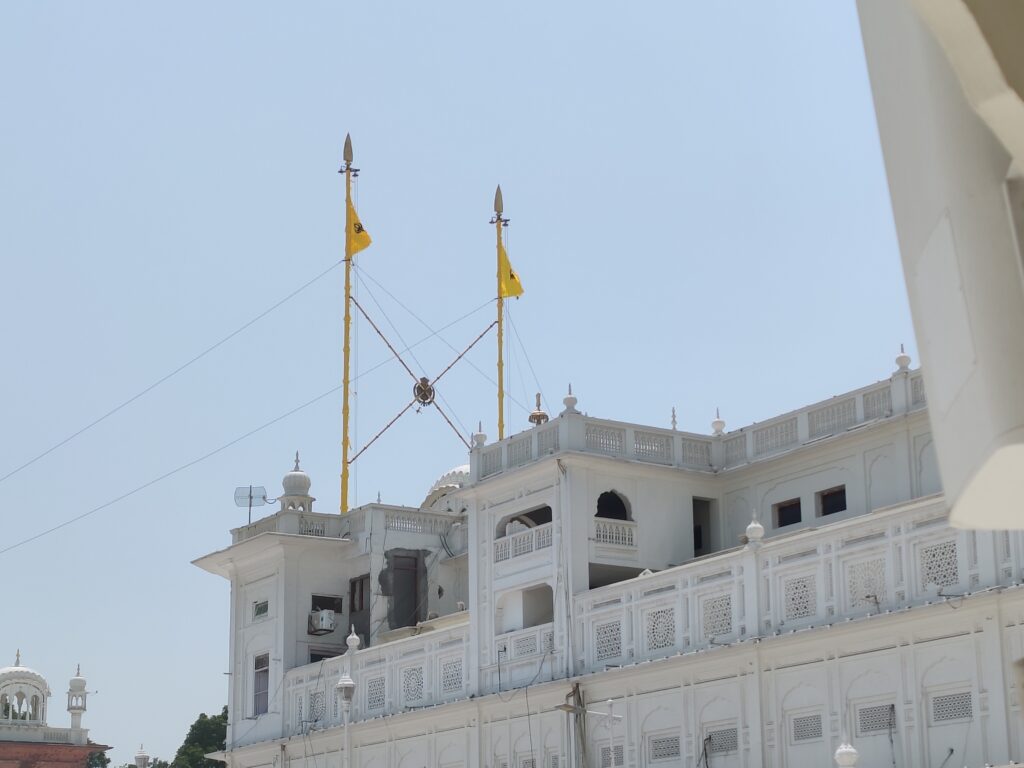
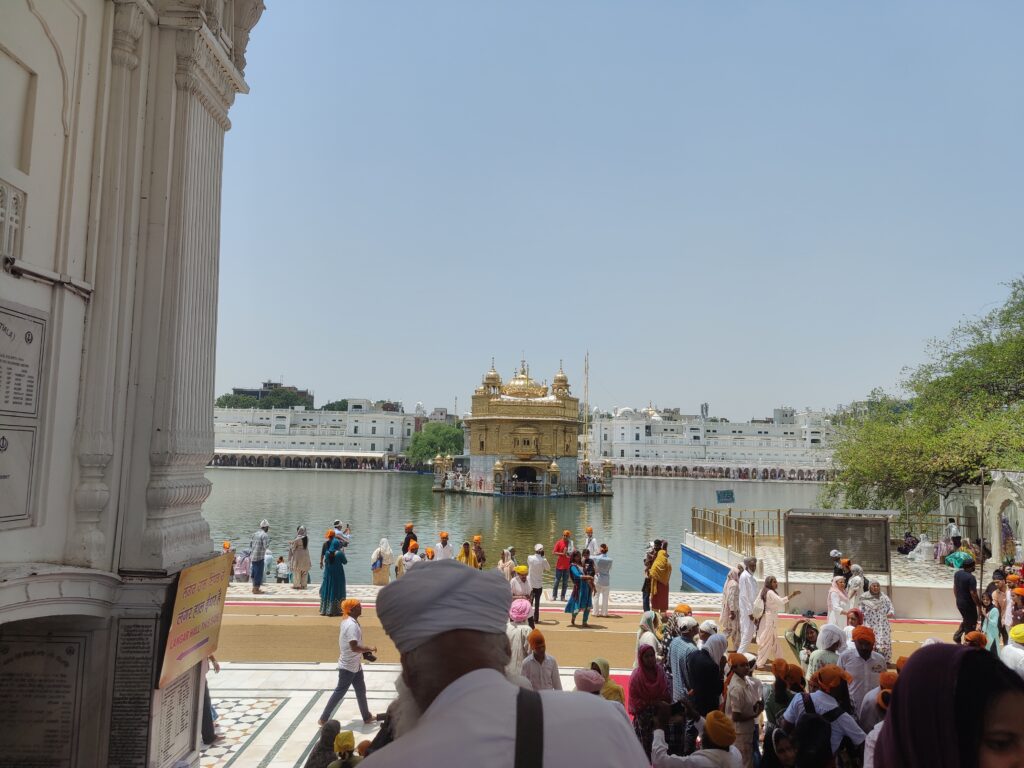
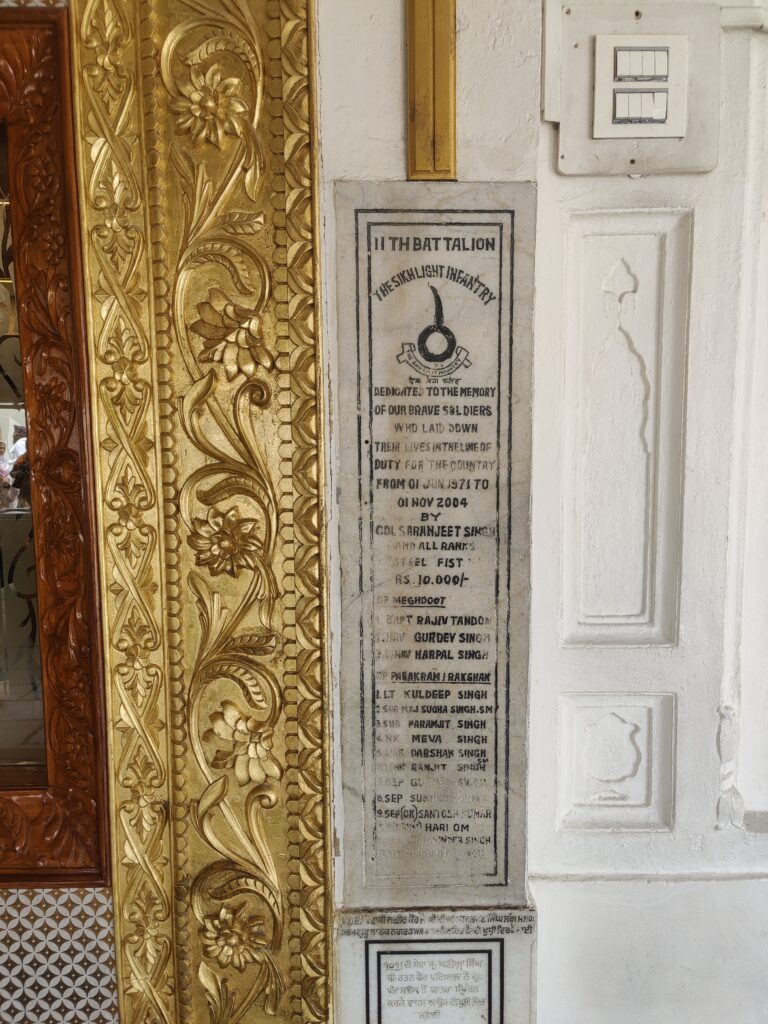
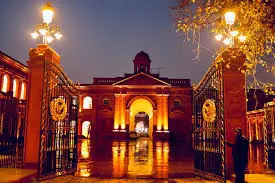
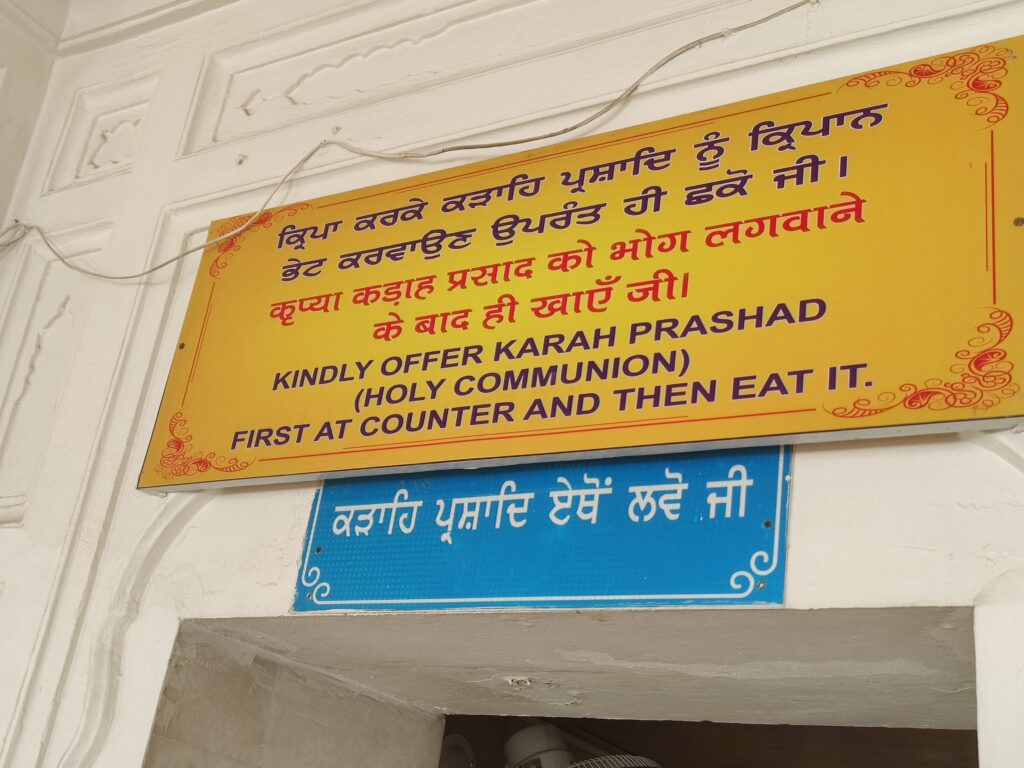
Amritsar is one of the most spiritually, historically, and culturally rich cities in India. Located in the Punjab state of northwest India, just 30 kilometres from the Pakistan border, it is the holiest city in Sikhism and home to some of the most moving experiences any traveller can have on the subcontinent. The name itself — Amritsar — translates as “Pool of Nectar,” a reference to the sacred water body at the heart of the Golden Temple complex.
Whether you come for faith, for history, for cuisine, or simply for the unforgettable spectacle of the Wagah Border ceremony, Amritsar rewards visitors with an intensity and warmth that is rare. The city is compact enough to explore in a day, yet layered enough that a two- or three-night stay barely scratches the surface. Most importantly, it is extremely accessible: well-connected to Delhi, Chandigarh, Dharamshala, and beyond by road, rail, and air.
This guide covers every practical question that first-time and returning visitors ask — from parking near the Golden Temple to VIP passes at Wagah Border — so you can plan with confidence.
2. Best Time to Visit Amritsar – Weather & Seasons {#best-time}
Amritsar experiences a continental climate with hot summers, a brief but intense monsoon, and cool-to-cold winters. Here is a seasonal breakdown:
October to March (Best Time) — This is unequivocally the best time to visit Amritsar. Temperatures range from a pleasant 8°C at night in December–January to a comfortable 22–25°C during the day in October and March. The weather allows extended outdoor exploration, and the Wagah Border ceremony is especially atmospheric in the crisp evening air. Winter fog (December–January) can occasionally cause train and flight delays, so factor that into connections.
April to June (Hot & Increasingly Uncomfortable) — Temperatures climb rapidly from April and can exceed 45°C in May and June. Visiting the Golden Temple in the blazing midday heat on marble floors is genuinely demanding. Mornings and evenings remain viable, but overall sightseeing comfort drops significantly.
July to September (Monsoon Season) — Rains arrive in July and humidity peaks. The city can experience flooding in low-lying areas. The Golden Temple sarovar (sacred pool) fills beautifully, but outdoor activities like the Wagah Border ceremony can be disrupted.
Practical weather tip : If visiting December through February, pack layers. Nights can be genuinely cold (4–8°C), while afternoons warm up to 15–18°C. A light jacket is essential for the Wagah Border ceremony, which takes place at dusk.
3. Where to Stay in Amritsar: Best Areas for 2 Nights {#where-to-stay}
Choosing the right area to stay in Amritsar can dramatically affect your experience. There are essentially two distinct zones, each with its own character:
The Old City / Golden Temple Area
Staying within walking distance of the Golden Temple (Harmandir Sahib) is the most atmospheric and convenient option, especially if you plan to visit at different times of day — which is highly recommended, as the temple looks completely different at dawn, midday, and after dark. The area around Heritage Street, Hall Bazaar, and the temple perimeter is packed with budget guesthouses, heritage hotels, and mid-range options.
The crucial thing to know: the entire area around the Golden Temple is strictly vegetarian and alcohol-free. There are no bars, no meat restaurants, and no smoking in this zone. This is either a major positive or a constraint depending on your preferences.
Within a five-minute walk, you have the Golden Temple itself, Jallianwala Bagh, the Partition Museum, the Akal Takht, and the Hall Bazaar. Traffic and noise levels are high during the day, but earplugs solve that problem.
Recommended hotels in the Golden Temple area: Ramada by Wyndham Amritsar (walking distance to the temple, outdoor pool), SureStay by Best Western Heritage Walk, Hotel Exotic (5-minute walk to the temple, garden and terrace), and BLACKWOOD Near Golden Temple (11-minute walk, shared lounge, terrace).
Ranjit Avenue / Mall Road / Green Avenue Area
If you want restaurants that serve non-vegetarian food, a bar, and a more resort-like stay — particularly properties with gardens, terraces, and pools — then Ranjit Avenue and Mall Road are the zones to prioritise. These areas are on the opposite side of the railway line from the Golden Temple, roughly 5–6 kilometres away. In light traffic, that is a 15-minute auto-rickshaw or taxi ride; in peak evening traffic, it can stretch to 30–40 minutes.
This zone is where you will find Amritsar’s most upscale branded hotels, the best restaurants serving Punjabi non-veg dishes, and the most comfortable evening dining options.
For a 2-night visit with a comfortable mid-range or upscale experience, the consensus from long-term travellers is to stay near Ranjit Avenue if you value outdoor spaces, a bar, and non-veg cuisine — or to stay near the Golden Temple if proximity and atmosphere are the priority. If you are 100% vegetarian and do not drink alcohol, staying near the Golden Temple is clearly the better choice.
4. Hotels with Gardens, Terraces & Outdoor Spaces {#hotels-gardens}
Amritsar is not known for large resort-style properties, but there are excellent options for travellers seeking green spaces, rooftop bars, outdoor pools, or terrace dining:
Taj Swarna Amritsar — Widely considered the finest hotel in the city. Upscale facilities, excellent dining, and a polished experience throughout.
Courtyard by Marriott Amritsar — A modern 5-star property on Mall Road. Known for a lively rooftop/terrace bar and very good overall amenities. Approximately 5–6 km from the Golden Temple.
Hyatt Regency Amritsar Hotel & Spa — A large upscale property with open outdoor areas, a pool, and outdoor dining spaces. Located adjacent to a mall. Note: some recent visitor reviews have mentioned that the property feels slightly dated — check current reviews before booking.
Holiday Inn Amritsar Ranjit Avenue by IHG — A popular mid-to-upper range choice with spacious outdoor and lounge areas.
Fairfield by Marriott Amritsar — 4-star option with a sun terrace, swimming pool, and buffet breakfast. Good value at its price point.
Ramada by Wyndham Amritsar — Walking distance from the Golden Temple, with an outdoor pool and rooftop bar spaces. One of the best-located mid-range branded hotels in the city.
Hotel Euphoria Green — Located 1.6 miles from the Golden Temple, this property offers an outdoor swimming pool, terrace, and restaurant. A solid mid-range option.
Welcomheritage Ranjit Vilas — Features a rooftop terrace, garden, and outdoor pool. Good for travellers who want greenery and comfort.
Le Méridien Amritsar — A 5-star property with a shared lounge, terrace, restaurant, and bar.
Practical advice from seasoned Amritsar visitors: The key to getting green outdoor space in Amritsar is to stay in the Ranjit Avenue / Mall Road / Green Avenue area rather than right beside the Golden Temple. The Old City area is dense and urban, with little open space around hotels.
5. Golden Temple (Harmandir Sahib): Everything You Need to Know {#golden-temple}
The Golden Temple — formally known as Sri Harmandir Sahib, meaning “Temple of God,” and also called Darbar Sahib or “Court of the Lord” — is the holiest shrine in Sikhism and one of the most visited sites in all of India, reportedly receiving over 100,000 visitors on busy days. It is also one of the most accessible, welcoming, and well-organised religious sites in the country.
The temple was founded in the late 16th century by Guru Ram Das, the fourth Sikh Guru, who excavated the sacred sarovar (pool) in 1577. Construction of the shrine was supervised by Guru Arjan Dev, the fifth Sikh Guru, between 1588 and 1604. In a remarkable symbol of interfaith harmony, the foundation stone is attributed to Hazrat Mian Mir, a Muslim Sufi saint. Unlike many Hindu temples which are elevated, the Golden Temple was built at a lower level than the surrounding land — a deliberate symbol of humility before God. The structure has four entrances, one on each cardinal direction, representing its openness to all faiths and cultures.
The temple was repeatedly attacked and destroyed through the 18th century, including by Afghan invader Ahmad Shah Abdali in 1762, before being rebuilt in 1764. The famous gold plating — the origin of the popular name “Golden Temple” — was added in the early 19th century under Maharaja Ranjit Singh, who covered the upper floors and domes with gold and marble, giving the complex its globally recognisable appearance.
What to See Inside the Complex
The complex is far more than just the central gilded shrine. Walking the Parikrama (the perimeter marble walkway surrounding the sarovar) gives you constantly changing views of the golden structure reflected in the sacred water. Key landmarks along the Parikrama include the Akal Takht (the spiritual and administrative authority of Sikhism), Gurdwara Dukh Bhanjani Ber (a small shrine beneath an ancient jujube tree believed to have curative powers), the Central Sikh Museum (open since 1958, housing rare artifacts, coins, weapons, manuscripts, and murals — housed on the first floor and highly recommended for history enthusiasts), and the Langar Hall in the southeast corner of the complex.
The Langar (Community Kitchen)
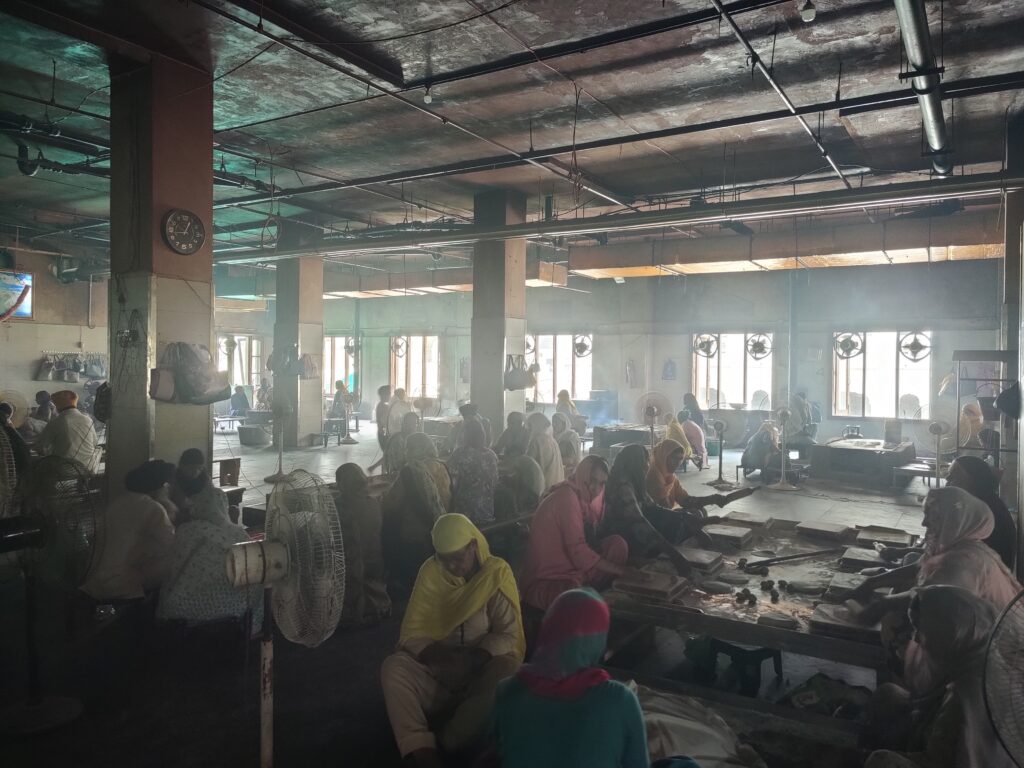
Participating in the Langar is one of the most profound experiences at the Golden Temple. It is a free meal served to all visitors regardless of religion, nationality, or status — everyone sits on the floor together, receiving the same food, which reflects the core Sikh principles of equality, humility, and service (seva). Volunteers run the kitchen around the clock, preparing simple but nourishing meals of dal, roti, and sabzi. No donations are required or expected, though voluntary contributions are welcome. Treat it as a cultural and human experience, not just a way to save money on a meal.
Opening hours: The Golden Temple complex is open virtually 24 hours a day, 365 days a year. There are no entry fees.
Entry rules: All visitors must remove shoes before entering (free cloakroom service is available with a numbered token system — well-organised and free of tip pressure). You must cover your head — scarves and head coverings are available free of charge at the entrance. Wash your hands and feet before entering the complex (foot-washing channels are at every entrance). Modest, respectful clothing is required. Photography is permitted in the courtyard and on the Parikrama but is not allowed inside the inner sanctum.
Mobiles: Mobile phones are permitted in the complex but should be used respectfully. Avoid selfies inside the prayer halls.
Silence: Despite the busy surroundings, the inner complex is one of the most serene environments in India. Keep your voice low. The sound of Gurbani (Sikh scripture being recited and sung) plays continuously from the central shrine.
How to reach the Golden Temple: From Amritsar Railway Station, it is approximately 2 km — around a 20-minute walk or a short auto-rickshaw ride. From Sri Guru Ram Dass Jee International Airport (ATQ), it is about 12 km. The most pleasant approach on foot is via Heritage Street (Ghanta Ghar / Clock Tower Gate), a broad pedestrian-only boulevard — the only fully pedestrian avenue many India travellers will have encountered.
How long does the visit take? Budget a minimum of 2–3 hours for a proper visit: one loop of the Parikrama, a wait to enter the inner sanctum (queue times vary widely — see below), time in the Langar, and visits to subsidiary shrines. If you want to take it slowly and experience the atmosphere fully, 4–5 hours is reasonable. Many visitors return for a second visit at a different time of day.
6. Best Time to Visit the Golden Temple to Avoid Queues {#avoid-queues}
Queue management at the Golden Temple is the single most common source of frustration among first-time visitors. On weekdays, the queue to enter the inner sanctum (Harmandir Sahib itself) can be 30–90 minutes. On weekends, public holidays, and major Sikh festivals (Gurpurabs), it can stretch to 3–5 hours or more.
To avoid the longest queues:
The very best times are early morning — from the opening of the Palki Sahib procession (the ceremonial procession of the Guru Granth Sahib) at approximately 4:00–4:30 AM — until around 8:00 AM. The complex is peaceful, the marble cool underfoot, and the golden shrine glows in the pre-dawn and early morning light in a way that afternoon visits simply cannot replicate. Many experienced visitors consider the early morning visit the definitive Amritsar experience.
The second best window is late evening, from around 9:00 PM onwards. The temple is beautifully illuminated, the evening rituals are deeply atmospheric, and queues shorten significantly after the post-sunset rush.
Midday (10:00 AM – 3:00 PM) tends to have the longest queues combined with the harshest heat in summer. If you are visiting on a weekday and must visit during daylight hours, late afternoon (3:00–5:00 PM) is preferable to midday.
Avoid visiting on Sundays and on Gurpurabs (especially Guru Nanak Jayanti and the birthday of Guru Gobind Singh) unless you are prepared for very large crowds. The anniversary of the installation of the Guru Granth Sahib (Parkash Utsav) is another extremely busy day.
Tip for families and senior travellers: The complex is well-managed with volunteers at every point, but the marble floors can be very slippery when wet, and the queues require standing for extended periods. Early morning or late evening visits are especially recommended for anyone with mobility concerns.
7. Golden Temple Dress Code & Visitor Rules {#dress-code}
The dress code at the Golden Temple is respectful but not onerous:
Head covering: Mandatory. You must cover your head at all times inside the complex. Scarves and bandanas are available free at the entrance for those who do not have their own. Men typically use a handkerchief or bandana; women use a dupatta or scarf.
Shoes: Must be removed before entering. A well-organised, free shoe cloakroom is available. You will receive a numbered token for collection.
Clothing: Wear modest, loose-fitting clothing that covers shoulders and knees. Sleeveless tops and shorts are not appropriate. There is no requirement to wear traditional Punjabi clothing — simply dress respectfully.
Alcohol and tobacco: Strictly prohibited within the complex and in the entire surrounding area.
Behaviour: Speak quietly, do not eat or drink (other than at the Langar), and do not use your phone aggressively for photography in the inner sanctum. The sevadars (volunteer attendants) are strict and will politely but firmly correct behaviour that is disrespectful. Follow their instructions without argument.
Bags and cameras: Small bags are permitted inside the complex. Larger bags should be checked at the cloakroom. Cameras are allowed in the courtyard and on the Parikrama but not inside the inner sanctum.
8. Car Parking Near the Golden Temple {#parking}
Parking near the Golden Temple is a genuinely tricky issue, and it is one of the most common practical questions from visitors who arrive by private car or hired taxi.
The area immediately around the temple is heavily pedestrianised, and private vehicles cannot approach closer than a few hundred metres. There are designated car parks on the periphery of the Heritage Street area. The SGPC (Shiromani Gurdwara Parbandhak Committee) car park near the Golden Temple is the most commonly used by visitors; it is free for devotees and has a reasonable capacity, but it fills up quickly on weekends and festival days.
The most practical approach if arriving by taxi is to ask your driver to drop you at the Ghanta Ghar (Clock Tower) entrance and find their own parking or wait in the nearby streets. Agree on a pickup point before you go in — mobile phone coverage can be patchy inside the complex due to signal suppression in the area.
If you are self-driving, arrive early (before 8:00 AM on weekdays) to secure a space in one of the peripheral car parks. On weekends and festivals, parking can be extremely limited and you may need to park significantly further away. Auto-rickshaws and e-rickshaws are available for the short hop from more distant parking areas.
9. Amritsar 1-Day Itinerary: Golden Temple, Jallianwala Bagh & Wagah Border {#itinerary}
Doing justice to Amritsar in a single day is demanding but absolutely possible if you are organised. Here is the optimal structure:
5:00 AM – 8:00 AM: Golden Temple — Dawn Visit Arrive at the Golden Temple at first light. The early morning atmosphere is extraordinary — kirtan plays softly, devotees perform their morning prayers, and the golden shrine glows on the still water of the sarovar. Queue times for the inner sanctum are at their shortest. Participate in the Langar if you wish (it operates 24 hours). Allow 2.5–3 hours.
8:30 AM – 9:30 AM: Breakfast on Heritage Street or Hall Bazaar Head to one of the legendary dhabas near the temple. Kesar Da Dhaba is the most famous and historic option. Try Amritsari kulcha with chole (spicy chickpeas), fresh lassi, and if you are feeling adventurous, the jalebis with rabri. This is not a meal to rush.
10:00 AM – 11:30 AM: Jallianwala Bagh A five-minute walk from the Golden Temple, Jallianwala Bagh is the memorial garden site of the 1919 Amritsar Massacre, where British colonial troops under General Dyer opened fire on a peaceful gathering of unarmed civilians, killing hundreds and wounding thousands more. The narrow alley entrance through which escape was impossible, the bullet marks still visible in the walls, and the Well of Martyrs are deeply sobering. Allow at least 90 minutes to do the site justice and read the historical panels.
11:30 AM – 12:30 PM: Partition Museum (Optional but Highly Recommended) Housed in the historic Town Hall building near the Golden Temple, the Partition Museum tells the human stories of the 1947 division of the subcontinent — one of the great tragedies of the 20th century. It is exceptionally well-curated and deeply moving. If you can only visit one museum in Amritsar, make it this one.
12:30 PM – 2:00 PM: Lunch & Rest at Hotel Amritsar afternoons in summer are brutal. Use this window to eat, rest, freshen up, and hydrate before the afternoon drive to Wagah.
3:00 PM – 3:30 PM: Depart for Wagah Border Leave by 3:00 PM in summer and by 2:30 PM in winter. The 30 km drive typically takes 45–60 minutes but can be longer with traffic. Your driver will know the best timing — listen to their advice.
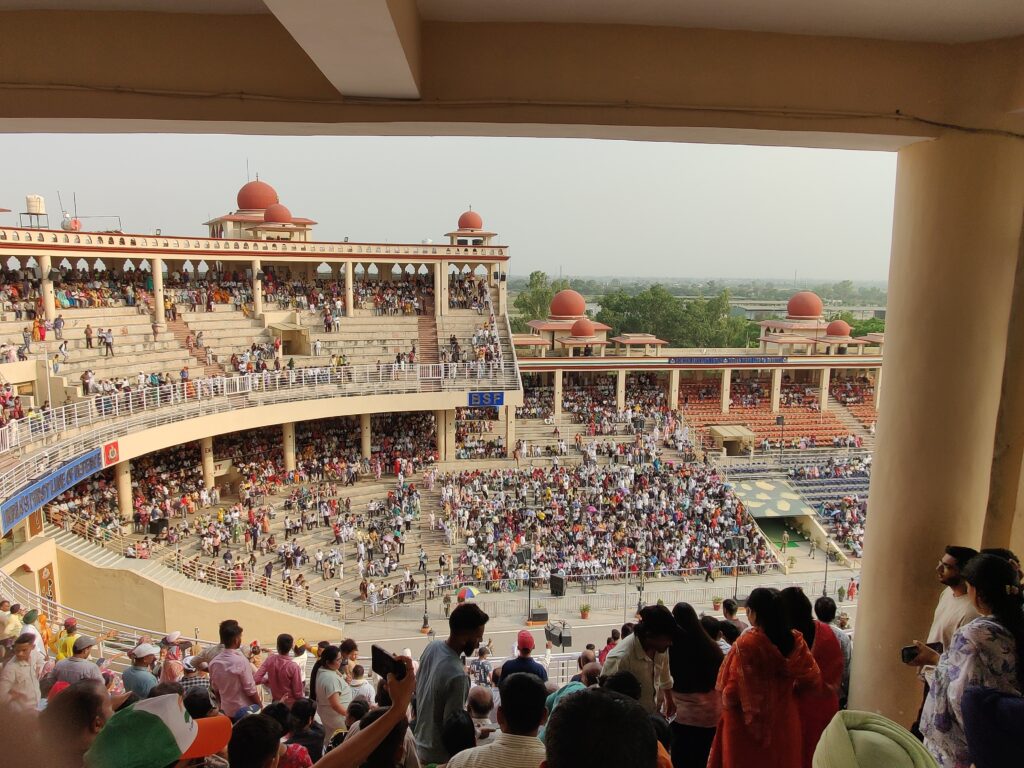
4:15 PM (Winter) / 5:15 PM (Summer): Wagah Border Retreat Ceremony Arrive at least 60–90 minutes before the ceremony to clear security (no bags are permitted past the security checkpoint — leave all luggage in the vehicle), find your seating, and absorb the atmosphere as crowds build. The ceremony itself lasts approximately 45 minutes and involves the Indian BSF and Pakistani Rangers performing a highly choreographed, high-energy flag-lowering ritual — one of the most electrifying live spectacles in South Asia.
Return to Amritsar: 7:00 PM – 7:30 PM
Evening: Heritage Street, Shopping & Dinner Spend your final hours browsing Heritage Street’s shops for phulkari embroidery, juttis (traditional shoes), Punjabi handicrafts, and spices. Dinner at The Crystal Restaurant (famous for Punjabi cuisine in a more formal setting) or return to one of the legendary street-food spots near the temple.
10. Wagah Border Ceremony: Timings, VIP Passes & Getting There {#wagah-border}
What Is the Wagah Border Ceremony?
The Attari-Wagah Border — located on the Grand Trunk Road, 30 km from Amritsar and 27 km from Lahore — is the only road border crossing between India and Pakistan. Every evening since 1959, the Indian Border Security Force (BSF) and the Pakistan Rangers have performed the Beating Retreat ceremony: a choreographed parade of high-stepping marches, synchronised flag-lowering, and a brief handshake between soldiers from both sides, followed by the closing of the gates. The atmosphere — with thousands of spectators, patriotic music, women and children dancing to nationalistic songs, and crowd chants of “Jai Hind” and “Vande Mataram” — is unlike anything else in India.
The ceremony begins at approximately 4:15 PM in winter and 5:15 PM in summer. Entry to the viewing area generally opens around 2:00–3:00 PM. Arrive early — the best seats fill fast, and security lines can be long.
The border is accessible from 10:00 AM to 4:00 PM for general entry. The ceremony lasts around 45 minutes, so budget 2–3 hours total for the trip including the ceremony.
Important: Entry can occasionally be closed due to political tensions between India and Pakistan. Check local news before setting out, especially during periods of bilateral strain.
This is one of the most searched questions about Wagah Border, and the answer requires some nuance.
There is no official online booking website for VIP passes to the Wagah Border ceremony as of 2025–2026. VIP passes are administered by the BSF (Border Security Force) and are typically obtained by approaching the BSF directly or through a recognised travel agent. Foreign nationals with a passport used to receive preferential access to the VIP viewing area automatically on showing their passport, but on-the-ground enforcement of this has become inconsistent — some visitors with foreign passports have been allowed into VIP security lines but then directed to general seating at the final checkpoint.
The safest approach for guaranteed VIP seating is to arrange passes through a reputable local tour operator or your hotel. Travel agents in Amritsar who frequently deal with the ceremony can often facilitate this. Viator and similar platforms offer cab-only arrangements to the border but typically do not include VIP access — read the small print carefully.
If you are unable to secure VIP passes, arrive very early (by 2:00 PM at the latest) to claim a good seat in the general viewing area. The experience is excellent from the general stands as well.
By taxi (recommended): A private taxi from Amritsar to Wagah Border costs approximately ₹781–₹2,466 depending on the vehicle type, covering the 30 km distance. Crucially, when using Uber for this route, confirm that your driver will wait for you at the border — some app-based drivers complete the outward journey and leave, leaving you stranded. A hotel-recommended taxi or a pre-arranged cab with a waiting agreement is more reliable.
By bus: The Punjab Roadways hop-on hop-off bus runs from Amritsar city centre to the border at a very affordable price. It is popular, gets crowded, and a seat is not guaranteed. Arrive early and be prepared to stand.
By auto-rickshaw or private vehicle: Multiple taxis and auto-rickshaws in Amritsar offer rides to the border. Negotiate the fare (including the return) before you leave.
No bags: You cannot carry bags past the security checkpoint. Everything must be left in your vehicle.
No mobile network: Mobile phone services are restricted in the area near the border.
11. Taxi, Uber & Ola in Amritsar: Which Is Best? {#taxis}
Amritsar has a functional mix of app-based and traditional taxi options:
Uber and Ola are available in Amritsar and work reasonably well for short in-city journeys and airport transfers. For specific routes like the Golden Temple to Wagah Border or outstation trips, app-based cabs have a key limitation: the driver completes their contracted trip and returns to the pool. For the Wagah Border specifically, you risk your driver leaving after dropping you off, with no guarantee of a return cab. If using Uber for Wagah, book a round-trip or explicitly confirm with the driver that they will wait.
Hotel-recommended taxis and local operators are generally the better choice for full-day sightseeing, Wagah Border, and outstation transfers (Dharamshala, McLeod Ganj, Chandigarh, Shimla). Your hotel can arrange a driver who knows the city well, quotes a transparent daily rate, and is accountable. This is especially true for longer journeys out of the city.
Auto-rickshaws and e-rickshaws are ideal for short hops within the city — from parking areas to the temple, between attractions in the old city area, or for the 2 km from the railway station to the Golden Temple. Always negotiate the fare before you board or ensure the meter is used.
For a full-day Amritsar sightseeing package covering the Golden Temple, Jallianwala Bagh, Wagah Border, and any other sites, a locally arranged car with driver typically costs ₹2,000–₹4,000 depending on the vehicle type and itinerary.
12. Airport Transfer in Amritsar {#airport-transfer}
Sri Guru Ram Dass Jee International Airport (IATA: ATQ) is located approximately 12 km from the Golden Temple and the city centre. Transfer options include:
Pre-booked taxi or cab: The most reliable option. Hotels typically arrange airport transfers; otherwise, MakeMyTrip, Ola, and Uber all offer airport pickup. Journey time is 20–35 minutes depending on traffic.
App-based cabs (Ola/Uber): Available at the airport. Follow signs to the designated pickup zones outside the terminal.
Auto-rickshaws: Available outside the terminal but less suitable for longer distances or with significant luggage.
Golden Temple in 5 hours from the airport: If you have a layover or a very tight schedule and want to visit the Golden Temple from the airport, it is entirely feasible. Allow 30 minutes travel each way plus 2.5–3 hours at the temple. A pre-booked taxi waiting to return you to the airport is essential to make this work within the time window.
13. Village Tours & Local Recommendations in Amritsar {#local-tips}
Beyond the headline attractions, Amritsar has a vibrant local culture that rewards deeper exploration:
Heritage Walks: Several operators offer guided heritage walks through the old city, covering colonial-era architecture, hidden havelis (courtyard mansions), laneway food stalls, and pre-Partition history. These typically start from Heritage Street and last 2–3 hours. Highly recommended for those who want to move beyond the typical tourist circuit.
Village Tours: Rural Punjab, just outside Amritsar, offers a very different experience from the city: mustard fields, traditional Punjabi farmhouses, bullock carts, and authentic home cooking. Several tour operators offer half-day or full-day village experiences. Pul Kanjari Village, near the Wagah Border, features a historic memorial and a site from the era of Maharaja Ranjit Singh — a worthwhile stop on a Wagah Border day.
Durgiana Temple: Often called the Silver Temple, the Durgiana Temple is architecturally similar to the Golden Temple — built on a tank, with a causeway leading to the central shrine — but is a Hindu temple dedicated to Goddess Durga. Much less crowded than the Golden Temple and deeply serene.
Gobindgarh Fort: A historic Sikh fort in the heart of Amritsar, now converted into an experiential heritage site with sound-and-light shows, galleries on Sikh history, and live performances. An excellent evening option.
Maharaja Ranjit Singh Museum: A well-curated museum covering the life and legacy of the Lion of Punjab, with artifacts, weapons, and paintings from the Sikh Empire era.
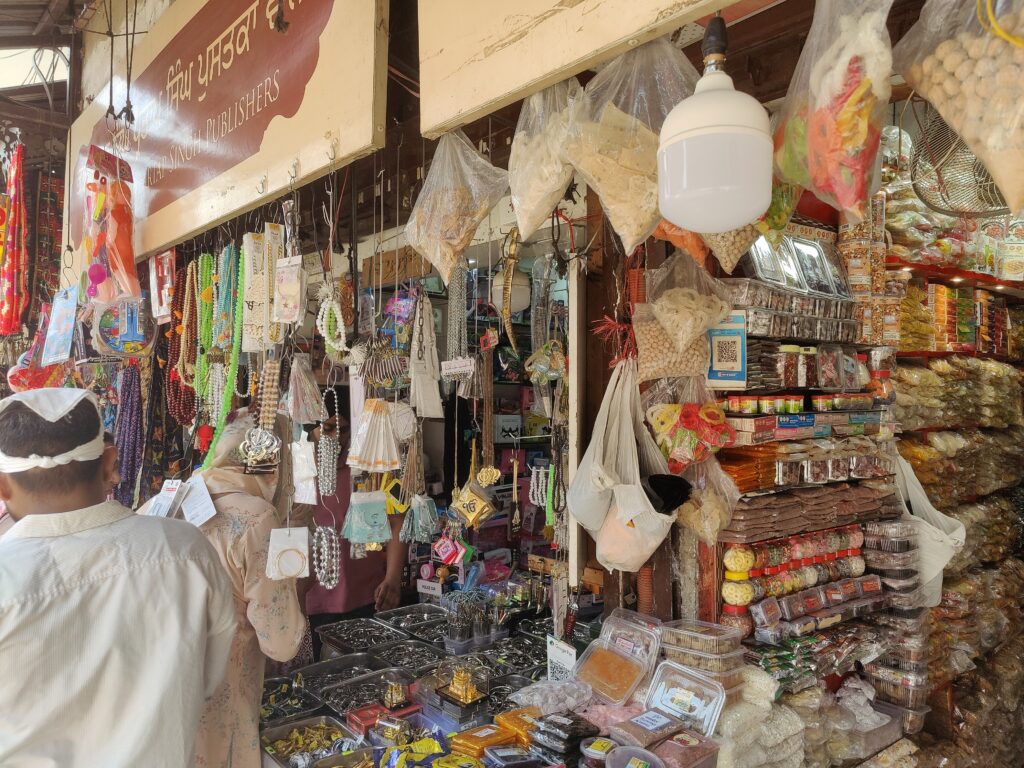
Shopping — Hall Bazaar and Heritage Street: Hall Bazaar is Amritsar’s famous shopping street, known for hand-embroidered phulkari fabrics, juttis (traditional pointed shoes), gold and silver jewellery, Punjabi pickles and papads, and artisan handicrafts. Heritage Street, the pedestrian boulevard leading to the Golden Temple, is more touristy but has a good selection of souvenirs.
Local food recommendations: Kesar Da Dhaba (legendary, over 100 years old, famous for dal makhni and kulcha); Kulchaland (dedicated to the Amritsari kulcha — stuffed bread with spiced potato/paneer filling, served with chole); Brothers Dhaba (another heritage favourite near the Golden Temple); Bhrawan Da Dhaba (try the sarson da saag with makki di roti in winter). For a more formal dining experience, The Crystal Restaurant is consistently recommended.
14. Hiring a Tour Guide in Amritsar {#tour-guide}
A knowledgeable local guide can transform your visit to Amritsar, particularly for the Golden Temple (where the history, rituals, and symbolism are rich), Jallianwala Bagh (where the colonial history benefits from detailed explanation), and the Partition Museum. English-speaking guides are readily available.
How to find a reputable guide: Ask your hotel for recommendations — this is the most reliable route. Alternatively, the Amritsar Tourism office and registered local operators can connect you with licensed guides. Viator and GetYourGuide list certified guided tour options with advance booking and reviews.
What to expect: A good guide for a full-day Amritsar circuit (Golden Temple, Jallianwala Bagh, Wagah Border, and old city) typically charges ₹1,500–₹3,000 per day. Specialist heritage walk guides, who are deeply knowledgeable about colonial and Partition-era history, may charge more. Always clarify whether the guide fee includes or excludes taxi/transport costs.
15. Transfer from Amritsar to Dharamshala / McLeod Ganj {#amritsar-dharamshala}
Dharamshala and McLeod Ganj (the home of the Dalai Lama and the Tibetan government-in-exile) are extremely popular destinations that many travellers combine with an Amritsar visit.
Distance: Amritsar to Dharamshala is approximately 220–240 km and takes 5–7 hours by road, depending on the route and traffic. The route passes through Pathankot and into the Kangra Valley foothills.
By private car / hired taxi: The most comfortable and flexible option. A one-way taxi from Amritsar to Dharamshala or McLeod Ganj costs approximately ₹3,500–₹6,000 depending on vehicle type. Book through your hotel or a reputable operator; agree the price, route, and drop-off point in advance.
By bus (HRTC Volvo): Himachal Pradesh Road Transport Corporation (HRTC) operates Volvo AC buses between Amritsar and Dharamshala. These are comfortable and affordable. Check current schedules with HRTC directly or at the Amritsar Bus Stand, as timings change seasonally.
By train + bus: Take a train from Amritsar to Pathankot (approximately 2 hours), then a local bus or taxi from Pathankot to Dharamshala / McLeod Ganj (approximately 2–2.5 hours). This requires a transfer but is a budget-friendly option.
Golden Temple Volvo Bus from Dharamshala to Amritsar: HRTC operates an overnight Volvo AC bus from Dharamshala to Amritsar (often referred to as the “Golden Temple Volvo” by travellers). It is popular and should be booked in advance, particularly during peak season (October–March and summer holidays). Check current booking through the HRTC website or at the Dharamshala / McLeod Ganj bus stand.
16. Transfer from Amritsar to Chandigarh & Shimla #amritsar-chandigarh}
Distance: approximately 230 km, 4–5 hours by road.
By train: Several daily trains run between Amritsar Junction (ASR) and Chandigarh (CDG). The journey takes approximately 4–5 hours. This is a reliable and comfortable option; book through IRCTC or a trusted agent.
By private car / taxi: Comfortable and direct. Cost approximately ₹3,500–₹5,500 for a sedan/SUV.
By bus: Punjab Roadways and PRTC run AC buses between Amritsar and Chandigarh. Comfortable and affordable; journey time around 4–5 hours.
Amritsar to Shimla
This is a longer journey of approximately 320–350 km and 8–9 hours by road. Most travellers break this into two segments: Amritsar to Chandigarh (4–5 hours), then Chandigarh to Shimla (3–4 hours by road or the famous narrow-gauge Toy Train from Kalka to Shimla).
The Kalka–Shimla Toy Train is a UNESCO World Heritage Railway and a spectacular experience in its own right — 96 km of narrow-gauge track climbing through tunnels and viaducts into the Shimla hills. From Amritsar, travel to Kalka (adjacent to Chandigarh, approximately 250 km) and board the Toy Train there. Book Toy Train tickets well in advance through IRCTC, as they are heavily in demand among tourists.
By private car all the way: Amritsar to Shimla direct is feasible in a day with an early start (5:00–6:00 AM departure), arriving by mid-afternoon. Cost approximately ₹7,000–₹10,000 for a full-day AC vehicle.
17. Bus from Amritsar to Delhi: AC Sleeper Options {#amritsar-delhi-bus}
The Amritsar–Delhi corridor is one of the most heavily travelled long-distance routes in northern India, with excellent options across all budgets.
Distance: Approximately 450–480 km; 8–10 hours by road depending on traffic.
AC Sleeper Buses: Several private operators run AC sleeper coaches on the Amritsar–Delhi overnight route, departing typically between 6:00 PM and 10:00 PM and arriving early morning in Delhi. This is a popular and cost-effective option that saves you a night’s hotel cost. Reputable operators include PRTC (Punjab Roadways), Zingbus, NueGo (an electric AC bus operator), and various private operators bookable through RedBus or Abhibus. Book online in advance, particularly for weekend and holiday travel.
By train (recommended for comfort and reliability): Shatabdi Express and other fast trains connect Amritsar to New Delhi in 6–8 hours. Train travel in 1AC, 2AC, or 3AC is comfortable and more reliable than road travel on this corridor. Book through IRCTC or a trusted ticketing agent (particularly important for foreign travellers who may find the IRCTC website complicated — the agent Raj_trainticket on TripAdvisor’s India forum is frequently recommended by experienced India travellers).
By air: Several daily flights connect Amritsar (ATQ) to Delhi (DEL/IGI). Flight time is approximately 1 hour. Useful if you have a tight schedule or an onward international connection.
18. Golden Temple Volvo Bus from Dharamshala {#volvo-bus}
The HRTC (Himachal Pradesh Road Transport Corporation) Volvo AC bus service connecting Dharamshala/McLeod Ganj with Amritsar is commonly called the “Golden Temple Volvo” or “Dharamshala–Amritsar Volvo.” It is a popular route among domestic travellers, pilgrims, and foreign tourists combining a Himachal Pradesh trip with a Golden Temple visit.
Key practical points:
The service is typically overnight or has early-morning departures in one or both directions. Journey time is approximately 6–8 hours depending on the route and stops.
Book in advance through the HRTC official website (hrtchp.com) or at the main Dharamshala/McLeod Ganj HRTC bus stand. During peak season (October–January for pilgrim traffic, and April–June for summer holiday traffic), seats fill up quickly.
Confirm current schedules locally on arrival in Dharamshala or Amritsar, as HRTC timings and routes do change seasonally.
19. Current Situation in Amritsar: Is It Safe to Visit? {#current-situation}
As of 2025–2026, Amritsar is safe for tourists. The city is one of the most visited destinations in India and sees enormous numbers of both domestic pilgrims and international visitors without incident. The Golden Temple complex itself is one of the safest, most well-managed religious sites in the country, with volunteers and security personnel at every point.
The city is located close to the Pakistan border, and travellers sometimes ask about safety given the historically tense India-Pakistan relationship. While border tensions do occasionally flare politically, these have very rarely affected visitor safety in Amritsar city itself. The Wagah Border ceremony, despite being literally at the international boundary, is a well-secured, well-controlled environment.
Entry to the Wagah Border ceremony can be suspended during periods of acute bilateral tension — this has happened occasionally in the past. Check current local news and your country’s travel advisory before visiting. Your hotel or a local travel agent will have up-to-date information.
General safety tips for Amritsar:
Travel insurance is always recommended when visiting India. Keep a photocopy of your passport separate from the original. The area around the Golden Temple is very well-lit and busy at all hours, making it one of the safer urban environments in India. Standard urban precautions apply — watch your pockets in crowded markets and keep your bags close.
20. Crossing Wagah Border into Pakistan {#crossing-wagah}
The Attari-Wagah border crossing is the only road crossing between India and Pakistan, and it is possible to cross it on foot — but it requires substantial advance preparation and is subject to the current political relationship between the two countries.
Requirements for crossing: You must have a valid Pakistani visa (obtained in advance from a Pakistani embassy or consulate in your home country — Indian nationals face significant additional restrictions). You must not have an Indian visa with a condition prohibiting Pakistan travel. The crossing is only open to pedestrians (and goods traffic) during designated hours; it is not open during the ceremony itself.
As of 2025–2026: Cross-border movement has been subject to periodic suspensions and restrictions. The current status should be verified with the Pakistani High Commission or Embassy in your country, and with your own government’s travel advisory, before planning this. Do not assume the crossing is open based on information from even a few months prior — political events between India and Pakistan can change the situation rapidly.
Tourist entry to Pakistan from India is rarely straightforward and is subject to Pakistani visa requirements, which historically have been difficult for Indian nationals and require careful planning for nationals of other countries as well. This is a specialist travel area — seek current, country-specific advice.
21. Amritsar Food Guide: Must-Try Local Dishes {#food-guide}
Amritsar is arguably the food capital of Punjab, and Punjabi food is itself one of the great cuisines of the world. Do not leave without trying:
Amritsari Kulcha: The city’s signature dish. A tandoor-baked flatbread stuffed with spiced potato or paneer (cottage cheese) filling, served with chole (spicy chickpeas), raw onion, green chutney, and pickle. Kulchaland near the Golden Temple is the most famous specialist.
Amritsari Fish: Batter-fried fish (typically freshwater fish) seasoned with carom seeds (ajwain), ginger-garlic, and spices. One of the finest street-food dishes in north India. Available at stalls near the Ram Bagh area.
Dal Makhni: Slow-cooked black lentils with butter and cream. Kesar Da Dhaba’s version is legendary.
Lassi: Amritsar’s thick, creamy lassi — served in oversized clay pots with a thick layer of malai (cream) — is in a different league from what you get elsewhere. Sweetened or plain.
Sarson da Saag with Makki di Roti: A winter classic. Mustard greens (sarson) cooked slowly with spices, served with thick corn flatbread and white butter. This dish is the soul of Punjab in winter months.
Jalebi: Deep-fried spirals of batter soaked in sugar syrup. Best eaten hot from the pan, optionally with rabri (sweetened condensed milk) or kheer.
Chole Bhature: Spicy chickpeas served with deep-fried puffed bread. The definitive Punjabi breakfast, available from early morning at countless stalls.
Kesar Wali Chai: Saffron-infused tea. Available at tea stalls throughout the old city.
Langar at the Golden Temple: As noted above, participating in the free community meal at the Golden Temple is itself a culinary and human experience not to be missed.
22. Frequently Asked Questions {#faqs}
How long should I spend in Amritsar? Two nights is the sweet spot for most visitors. This allows you to see the Golden Temple twice (once by day, once by night or early morning), visit Jallianwala Bagh and the Partition Museum, attend the Wagah Border ceremony, and explore Heritage Street and the food scene without feeling rushed.
Is Amritsar a good base for exploring Punjab? Yes. Amritsar makes an excellent base for day trips to the Wagah Border (30 km), and as a starting point for road trips to Dharamshala/McLeod Ganj (5–7 hours), Chandigarh (4–5 hours), Dalhousie (4–5 hours), and Shimla via Chandigarh/Kalka (8–9 hours total).
Is Uber / Ola reliable in Amritsar? For short city journeys and airport transfers, yes. For Wagah Border trips and outstation journeys, a hotel-recommended taxi with a negotiated waiting/return arrangement is more reliable.
Do I need to book Golden Temple visits in advance? No advance booking is required for darshan (visiting). The temple is open 24 hours and entry is free. However, if you want to book accommodation within the SGPC guesthouses on the complex, contact the SGPC directly at sgpcsarai.com.
What language is spoken in Amritsar? Punjabi is the primary language, with Hindi also widely spoken. English is well understood in hotels, upscale restaurants, and by anyone working in tourism.
Is the Golden Temple area suitable for non-vegetarians and those who drink alcohol? The entire old city area around the Golden Temple is strictly vegetarian and alcohol-free. For non-vegetarian dining and bars, stay or dine in the Ranjit Avenue / Queens Road / Mall Road area.
Can I visit Amritsar in summer? You can, but temperatures can exceed 45°C in May–June. Visit the Golden Temple at dawn (4:00–8:00 AM) and after sunset (9:00 PM onwards). Plan all outdoor activities for early morning or evening.
How do I get from Amritsar Airport to the Golden Temple in 5 hours? This is very achievable. A pre-booked taxi will take 20–30 minutes from the airport to the temple. Spend 2.5–3 hours at the temple complex, and have your taxi waiting to return you to the airport with 60–90 minutes to spare before your flight. Confirm with the driver in advance and keep their number accessible.
Is the Wagah Border ceremony worth attending? Overwhelmingly yes — it is one of the most unique and electrifying spectacles in India and should be on every Amritsar itinerary. Even travelers who approach it skeptically typically find themselves swept up in the atmosphere.