Introduction: The Video That Went Viral Again
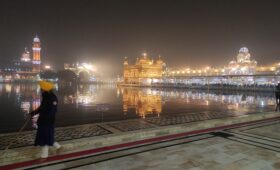
A short clip filmed inside the parikrama (circumambulation path) of Sachkhand Shri Harmandir Sahib, popularly known as the Golden Temple, Amritsar, has once again put the spotlight on one of the most talked-about aspects of visiting a Sikh gurdwara: the dress code.
In the video, which was shared on Instagram by the account @truescoop (you can view the original reel here: https://www.instagram.com/reel/DacbL7VT99D/), a foreign tourist is seen arriving at the holy complex wearing shorts. A sewadar — a volunteer who serves at the gurdwara — steps forward and calmly explains that the Golden Temple welcomes visitors of every faith, nationality, and background, but that everyone, without exception, is expected to dress modestly and cover their head before entering the sanctum.
The sewadar’s exact words, as captured in the video, were a gentle but firm reminder: the Golden Temple’s code of conduct applies to every visitor — Sikh or non-Sikh, Indian or foreign, tourist or pilgrim — and that includes covering the head and avoiding short or revealing clothing.
The clip triggered the kind of debate that has become familiar on Indian social media whenever a “dress code at a religious site” story goes viral. One commenter pointed out that visitors are expected to research a place’s customs before showing up, comparing it to how tourists wouldn’t dream of wearing a tank top inside St. Peter’s Basilica in Vatican City. Another pushed back, arguing that faith and devotion should be judged by a person’s intentions and mindset, not by the cut of their clothing. A third user summed up the general sentiment: virtually every major religious site in the world — mosques, temples, churches, gurdwaras — enforces some version of a modesty code, and the Golden Temple is no different.
This single video, and the reaction to it, is really a small window into something much bigger: a set of religious, historical, and cultural reasons why the Golden Temple’s dress code exists in the first place. To understand why a piece of cloth over your head or a pair of full-length trousers matters so much at Harmandir Sahib, you have to understand the temple’s history, the Sikh faith’s relationship with the human body and equality, and the centuries-old traditions that shape how pilgrims are expected to present themselves before the Guru.
This article is a deep, comprehensive guide to all of it: the viral incident, the historical origins of the Golden Temple, the theological reasoning behind covering your head, the practical dress code every visitor should know, and how it compares with dress codes at other major religious sites around the world.
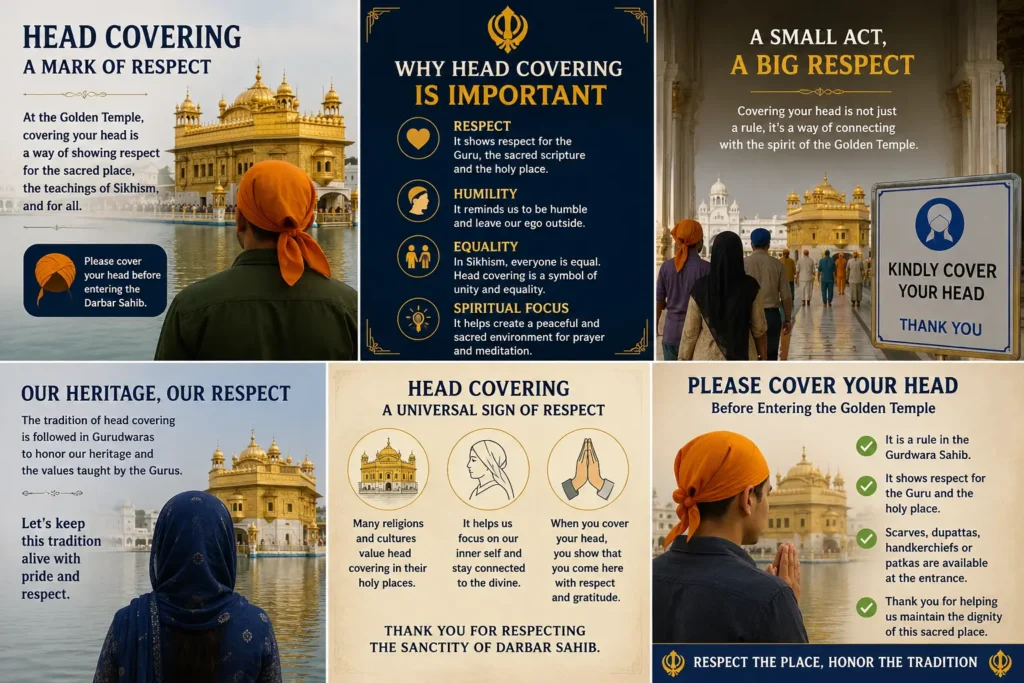
Table of Contents
Introduction: The Video That Went Viral Again. 1
1. What Happened: The Viral Golden Temple Shorts Incident 2
2. What Is the Golden Temple? A Quick Primer. 2
3. The Deep History of Sri Harmandir Sahib. 3
The Founding Vision of Guru Ram Das. 3
Guru Arjan Dev and the Construction of the Shrine. 3
The Installation of the Guru Granth Sahib. 3
Centuries of Destruction and Rebuilding. 4
4. Why Sikhs Built the Golden Temple the Way They Did. 4
5. Why Covering Your Head at the Golden Temple Is Non-Negotiable. 5
It Is a Sign of Respect Before the Living Guru. 5
It Symbolizes Humility, Not Just Etiquette. 5
It Reinforces the Egalitarian Message of the Temple. 5
It Is Considered a Basic Act of Devotion. 5
6. The Religious and Cultural Roots of Head Covering in Sikhism.. 6
7. Why Modest Clothing Matters at the Golden Temple. 6
Modesty as an Extension of Respect 6
A Shared Space for Prayer and Reflection. 7
Equality Applies to Dress Too. 7
8. The Full Golden Temple Dress Code: A Practical Guide. 7
9. What Happens If You Don’t Follow the Dress Code. 8
10. How the Golden Temple’s Rules Compare to Other Religious Sites Worldwide. 8
11. The SGPC’s Official Guidelines for Visitors. 9
12. Why This Story Keeps Going Viral 9
13. Etiquette Beyond Clothing: What Else Visitors Should Know.. 10
14. Frequently Asked Questions. 10
1. What Happened: The Viral Golden Temple Shorts Incident
According to the video that circulated widely this week, a foreign visitor arrived at the Golden Temple complex wearing shorts, apparently unaware of — or unprepared for — the gurdwara’s modesty requirements. A sewadar on duty intervened before she could proceed toward the sanctum, explaining that the shrine is open to people of every faith and nationality, but that all visitors must follow the Maryada (code of conduct), which requires covering the head and dressing modestly.
The moment was filmed and quickly spread across Instagram, X (formerly Twitter), and other platforms, drawing thousands of reactions. As is typical with these viral moments, opinion split into two camps:
- Those who felt the sewadar was simply doing his job, and that any visitor to any sacred site — a mosque, a Hindu temple, a Buddhist monastery, a Catholic cathedral — has a responsibility to learn the local customs beforehand.
- Those who felt the emphasis on physical appearance missed the point of worship, arguing that spiritual sincerity matters more than fabric length.
Both viewpoints have some merit, and we’ll examine them later in this article. But first, it’s worth understanding exactly why the Golden Temple has these rules at all — because the dress code isn’t an arbitrary modern invention. It’s rooted in centuries of Sikh history, theology, and the specific circumstances under which the shrine itself was built.
2. What Is the Golden Temple? A Quick Primer
Before diving into the history, here’s a quick primer for readers unfamiliar with the site.
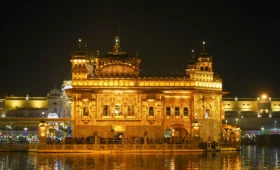
The Golden Temple, formally known as Sri Harmandir Sahib (also spelled Harmandar Sahib) or Sri Darbar Sahib, is the holiest gurdwara of Sikhism, located in the city of Amritsar, in the Indian state of Punjab. It sits at the center of a large pool called the Amrit Sarovar (“pool of nectar”), from which the city of Amritsar takes its name.
The upper floors of the main shrine are covered in gold leaf, which is why it is popularly called the “Golden Temple” in English, though its Punjabi and religious name, Harmandir Sahib, translates roughly to “Temple of God” or “Abode of God.”
The shrine is managed by the Shiromani Gurdwara Parbandhak Committee (SGPC), the elected body responsible for administering major Sikh gurdwaras in Punjab. It receives an extraordinary number of visitors every single day — reportedly over 100,000 people, and even higher on weekends and major Sikh festivals like Baisakhi and Guru Nanak Jayanti — making it one of the most visited religious sites on earth, alongside the Vatican and Mecca.
3. The Deep History of Sri Harmandir Sahib
To understand why the Golden Temple enforces such a strict dress code, you have to go back more than 400 years.
The Founding Vision of Guru Ram Das
The land on which the Golden Temple stands was identified by the fourth Sikh Guru, Guru Ram Das Ji, in the late 16th century. He acquired the land and began excavating the sacred tank — the Amrit Sarovar — around which the town that would become Amritsar grew.
Guru Arjan Dev and the Construction of the Shrine
It was the fifth Guru, Guru Arjan Dev Ji, who completed the construction of the Sarovar and commissioned the building of the temple itself in the centre of the pool, completing it around 1604. This is a critical historical detail: Guru Arjan Dev deliberately designed the temple to sit lower than the surrounding land, and built it with four entrances facing all four cardinal directions — north, south, east, and west.
This architectural choice was not accidental. It was a direct theological statement: unlike many temples of the era that were built on elevated platforms and restricted entry to select castes or communities, the Golden Temple was built low, so that people would have to walk down toward it — a physical gesture of humility — and with four open doors so that people from every direction, every caste, every religion, and every walk of life could enter freely and equally.
This single architectural decision is the seed from which almost every rule at the Golden Temple grows, including the dress code. The idea has always been: everyone is equal here, and everyone must show equal respect.
The Installation of the Guru Granth Sahib
In 1604, Guru Arjan Dev Ji compiled the Adi Granth, the first version of what would eventually become the Guru Granth Sahib, the eternal and living Guru of the Sikh faith, and installed it inside Harmandir Sahib. This moment transformed the Golden Temple from simply a beautiful shrine into the spiritual and doctrinal heart of Sikhism — the place where the Guru Granth Sahib is ceremonially opened each morning and closed each night, and where its verses are sung continuously throughout the day through Kirtan (devotional hymn-singing).
Centuries of Destruction and Rebuilding
The Golden Temple’s history is also one of resilience. It was attacked and desecrated multiple times over the centuries — notably by Afghan invader Ahmad Shah Durrani in the 18th century — and rebuilt each time by the Sikh community. In the early 19th century, Maharaja Ranjit Singh, the Sikh ruler of the Punjab Empire, ordered the upper floors of the temple to be covered in gold leaf, giving the shrine the appearance it is famous for today and cementing its popular English name, the “Golden Temple.”
In more recent history, the temple complex was the site of Operation Blue Star in 1984, a controversial and traumatic military operation that remains a significant and sensitive chapter in Sikh and Indian history.
Through all of this, the core identity of the Golden Temple has remained the same: a place built on the principle of equality, humility, and openness to all — which is precisely why its code of conduct, including the dress code, is taken so seriously by the community that maintains it.
4. Why Sikhs Built the Golden Temple the Way They Did
It’s worth pausing here to unpack why equality and humility are so central to Sikh architecture and etiquette, because this directly explains the dress code.
Sikhism, founded by Guru Nanak Dev Ji in the 15th century, emerged as a rejection of the caste-based discrimination and ritualistic exclusivity that characterized much of the religious landscape of medieval India. Guru Nanak preached that all human beings are equal in the eyes of God, regardless of caste, gender, religion, or social status.
This philosophy is expressed physically throughout Sikh religious spaces:
- The langar (communal free kitchen) found in every gurdwara, including the Golden Temple, where anyone — rich or poor, Sikh or non-Sikh — sits on the floor at the same level and eats the same food, symbolizing equality.
- The four doors of the Golden Temple, representing openness to all four directions and all communities.
- The requirement that everyone, including the Guru Granth Sahib’s attendants, remove their shoes and cover their heads — no exceptions are made for status, wealth, or nationality.
Understanding this is essential to understanding the dress code controversy. When a sewadar asks a visitor to cover their head or avoid shorts, they are not applying an arbitrary modern rule — they are upholding a 400-year-old design principle meant to ensure that everyone, without exception, approaches the Guru with the same humility and respect.
5. Why Covering Your Head at the Golden Temple Is Non-Negotiable
This is the heart of the matter, and the part of the story most likely to confuse first-time visitors, especially international tourists unfamiliar with Sikh customs.
It Is a Sign of Respect Before the Living Guru
In Sikhism, the Guru Granth Sahib is not treated as a book or a historical text — it is treated as the living, eternal Guru. It is ceremonially woken each morning (Prakash), fanned with a chaur sahib throughout the day exactly as royalty would be attended to, and ceremonially put to rest each night (Sukhasan). Every custom inside the Golden Temple exists to honour this living presence.
Covering the head in the presence of the Guru Granth Sahib is considered an act of reverence and submission — a physical acknowledgment that you are in the presence of something greater than yourself. This is why every single person who enters the Darbar Sahib, from the highest-ranking dignitary to the poorest pilgrim, covers their head. There are no exceptions made for celebrities, politicians, foreign heads of state, or tourists.
It Symbolizes Humility, Not Just Etiquette
Uncovering the head has historically been associated with pride, vanity, or status display in South Asian cultural context — think of removing a turban or headscarf as an act tied to ego and self-importance. Covering the head, conversely, is a symbolic act of setting aside your ego, your social status, and your individual identity before God. This is precisely why Sikh men wear turbans as an article of faith, and why every visitor — Sikh or not — is asked to at least cover their head with a scarf, bandana, or the cotton head coverings provided free of charge at the entrance of the Golden Temple.
It Reinforces the Egalitarian Message of the Temple
Just as the low-lying, four-doored architecture of the temple was designed to erase hierarchy, the head-covering rule erases visible markers of class, caste, wealth, and status. When everyone’s head is covered, no one can be distinguished by their hairstyle, their jewelry, or their social standing. Everyone looks, quite literally, the same before the Guru.
It Is Considered a Basic Act of Devotion
For practicing Sikhs, covering the head isn’t a bureaucratic requirement — it’s an act of bhakti (devotion) comparable to how devotees in other faiths might kneel, bow, or remove their shoes. Asking a visitor, regardless of their background, to observe this single gesture is considered the bare minimum expression of respect toward a faith that has, in turn, opened its doors — literally, through four entrances — to everyone.
6. The Religious and Cultural Roots of Head Covering in Sikhism
Head covering in Sikh tradition extends beyond the Golden Temple itself and is deeply woven into the Sikh Rehat Maryada, the official code of conduct governing Sikh religious and personal life, as maintained by the SGPC.
A few key threads worth understanding:
- Kesh (uncut hair) is one of the Five Ks — the five articles of faith that baptized Sikhs (Khalsa) are required to maintain. Because uncut hair is considered sacred, the turban evolved as a practical and spiritual way of managing and honouring that hair.
- For Sikh men, the turban is not merely a head covering — it is one of the most visible articles of the faith, symbolizing honour, self-respect, spirituality, and commitment to Sikh values.
- Sikh women may also wear a turban or a chunni (headscarf), particularly inside gurdwaras, though customs vary across families and regions.
- Non-Sikh visitors are not expected to wear a turban, but they are expected to cover their head with any piece of cloth — a scarf, bandana, cap, or the simple cotton headscarves that the Golden Temple management provides free at the entrance for anyone who arrives without one.
This is an important nuance that often gets lost in viral debates: the Golden Temple’s head-covering rule is not about forcing non-Sikhs to adopt Sikh religious symbols. It is a universal modesty and respect requirement that anyone, of any faith, can fulfil with something as simple as a handkerchief.
7. Why Modest Clothing Matters at the Golden Temple
Alongside head covering, the second pillar of the Golden Temple’s dress code is modest, appropriate clothing — the exact issue raised in the viral video.
Modesty as an Extension of Respect
Just as covering the head signals humility before the Guru, modest clothing extends that same principle to the whole body. The Golden Temple, like most major religious institutions worldwide, asks visitors to avoid clothing that is considered “showy,” overly revealing, or attention-drawing — shorts, mini-skirts, sleeveless tops, and tight-fitting outfits are typically discouraged for men and women alike.
A Shared Space for Prayer and Reflection
The Golden Temple isn’t a tourist attraction in the conventional sense — it is an active, functioning place of worship where thousands of devotees sit in Kirtan, perform seva (selfless service), and engage in quiet personal prayer throughout the day and night. Modest dress helps preserve an atmosphere of collective devotion rather than one where visitors are dressed for a beach or a gym. It ensures that the focus for every visitor — pilgrim or tourist — remains on the sanctity of the space rather than on individual fashion choices.
It’s worth noting that the Golden Temple’s dress code, as outlined by the SGPC, is relatively simple and not excessively restrictive compared to some other religious sites. Jeans, trousers, and long skirts are permitted; there’s no requirement for specific colours or religious garments for visitors. The essential guidance is simply: cover your shoulders and knees, avoid shorts and sleeveless clothing, and keep your head covered.
Just as the temple’s architecture and rituals are designed to erase distinctions of caste and class, the modest dress requirement applies equally to everyone — men, women, Sikhs, non-Sikhs, Indians, and foreign tourists alike. This universality is part of why the sewadar in the viral video was careful to emphasize that the Golden Temple “welcomes people of all faiths and nationalities,” while still holding everyone to the same standard.
8. The Full Golden Temple Dress Code: A Practical Guide
For travellers planning a visit to Sri Harmandir Sahib, here is a practical breakdown of what to wear and what to avoid, compiled from the SGPC’s publicly stated visitor guidelines.
What to wear:
- Full-length trousers, jeans, salwar-kameez, kurta-pyjama, sarees, or long skirts
- A scarf, dupatta, bandana, or cap to cover your head (free cloth head coverings are also available at the entrance for anyone who needs one)
- Comfortable clothing, since you will walk barefoot on marble and stone pathways, some of which can get hot in peak summer
What to avoid:
- Shorts or mini-skirts
- Sleeveless tops, tank tops, or vests
- Tight or revealing clothing
- Clothing with offensive imagery or text
Other essentials:
- Shoes must be removed and deposited at the free shoe-counters near the entrance
- Feet should be washed in the small water channel before stepping onto the marble parikrama
- Smoking, tobacco, alcohol, and other intoxicants are strictly banned inside the entire complex
- Photography and videography are only allowed in designated areas and are prohibited inside the sanctum sanctorum without prior permission
9. What Happens If You Don’t Follow the Dress Code
Contrary to some assumptions, visitors who arrive inappropriately dressed are not simply turned away with no recourse. In most cases:
- Sewadars politely explain the dress code, as seen in the viral video, and guide the visitor toward a solution.
- The Golden Temple management typically keeps extra scarves and head coverings on hand for visitors who arrive without one.
- In cases of clothing that’s considered too revealing (like shorts), visitors are generally asked to cover up with a shawl or wrap, or to wait until they can change, rather than being permanently barred from entry.
- The overall approach, as SGPC officials have publicly stated, is one of education rather than confrontation — many visitors, especially international tourists, are simply unaware of the customs and are not being intentionally disrespectful.
10. How the Golden Temple’s Rules Compare to Other Religious Sites Worldwide
One of the recurring points made in the comments under the viral video was the comparison to the Vatican, and it’s a genuinely useful comparison for understanding why dress codes at sacred sites are a global norm, not something unique to Sikhism.
- St. Peter’s Basilica, Vatican City: Enforces a strict dress code prohibiting shorts, sleeveless tops, and bare shoulders for both men and women. Visitors are regularly turned away at the entrance for violations.
- Mosques worldwide: Typically require both men and women to dress modestly, with women often required to cover their hair, arms, and legs, and remove shoes before entering prayer halls.
- Hindu temples in India: Many major temples, including those in South India, require men to remove shirts or wear traditional dhotis, and ask women to avoid Western-style shorts or sleeveless clothing.
- Buddhist temples in Southeast Asia: Sites like Angkor Wat in Cambodia and temples in Thailand enforce shoulder- and knee-covering rules, sometimes providing wrap-around sarongs for visitors who arrive in shorts.
- Synagogues: Many require head coverings (kippahs) for men, which are typically provided at the entrance for visitors who don’t bring their own.
Seen in this context, the Golden Temple’s dress code isn’t an isolated or unusually strict rule — it reflects a nearly universal principle across world religions: sacred spaces ask visitors to dress in a way that reflects reverence, not personal fashion preference.
11. The SGPC’s Official Guidelines for Visitors
Following a series of similar controversies over the years — including a widely discussed 2023 incident involving a visitor and a dress-code dispute that became entangled in an unrelated debate over national symbols — the Shiromani Gurdwara Parbandhak Committee (SGPC) formalized and publicized a clear set of visitor guidelines. These are now displayed on digital screens at the main entrance of the complex in Punjabi, Hindi, and English, and include:
- Avoiding “showy and short clothes”
- Covering the head at all times inside the complex
- Keeping phones on silent mode
- Not photographing or filming without permission
- Refraining from loud talking, shouting, or disturbing the serene atmosphere
- A strict ban on tobacco, alcohol, and other intoxicants anywhere inside the complex, including in bags and pockets
- Cooperating respectfully with sewadars, who are specifically trained to explain the Maryada (code of conduct) to visitors
The SGPC president has publicly stated that these guidelines exist primarily to educate visitors — particularly first-time and international tourists — rather than to police or exclude them, reflecting the same spirit of openness that has defined the Golden Temple since Guru Arjan Dev Ji built its four doors facing every direction.
12. Why This Story Keeps Going Viral
It’s worth asking: why does a video of a tourist being asked to cover up at the Golden Temple generate so much online debate, again and again?
Part of the answer is cultural friction — many international visitors to India come from countries where religious dress codes at tourist-frequented sites are less rigorously enforced, or where a place of worship might also function partly as a general tourist attraction with fewer restrictions. The mismatch between expectation and reality creates a “teachable moment” that’s inherently shareable on social media.
The other part of the answer is that these videos tap into a much larger, ongoing conversation in India about religious respect, cultural sensitivity, and how visitors — both foreign and domestic — should behave at the country’s holiest sites. Because the Golden Temple is one of the most visited and most photographed religious sites in the world, any interaction there involving a rule violation is almost guaranteed to attract national attention.
13. Etiquette Beyond Clothing: What Else Visitors Should Know
If you’re planning your first visit to the Golden Temple, dress code is just one part of a broader etiquette that visitors are expected to observe:
- Walk, don’t run, along the parikrama, and try to move in a clockwise direction around the sarovar, as is customary.
- Don’t turn your back to the sanctum sanctorum (Harmandir Sahib) if you can avoid it, particularly while inside the main shrine.
- Try the langar. Everyone, regardless of religion or background, is welcome to sit on the floor and share a free vegetarian meal in the community kitchen — one of the most powerful expressions of Sikh equality in practice.
- Keep noise to a minimum, especially inside the main shrine, where kirtan is being continuously performed.
- Don’t step over people who are sitting or lying down anywhere in the complex, and be mindful of others during peak hours.
- Carry a small scarf or cap with you if you’re planning to visit, so you’re not relying on the provided head coverings, particularly during high-traffic seasons.
14. Frequently Asked Questions
Q: Do I have to be Sikh to visit the Golden Temple? No. The Golden Temple, true to its founding principle of openness through four doors, welcomes visitors of every faith and nationality.
Q: Is there a fee to enter the Golden Temple? No, entry is completely free, and so is the langar (community meal). Visitors should never be asked to pay a sewadar for any service inside the complex.
Q: What if I don’t have a scarf to cover my head? Free cotton head coverings are available at the entrance of the complex for any visitor who needs one.
Q: Can I wear jeans at the Golden Temple? Yes, jeans are generally acceptable as long as they aren’t ripped, overly tight, or paired with a sleeveless top.
Q: Are men also required to cover their heads? Yes. The head-covering rule applies equally to men and women, Sikhs and non-Sikhs.
Q: Can I take photographs inside the Golden Temple? Photography is allowed in many outdoor areas of the complex but is restricted or prohibited inside the sanctum sanctorum without specific permission.
15. Conclusion
The viral video of a foreign tourist being gently reminded to dress modestly at the Golden Temple isn’t really a story about one visitor’s wardrobe choice — it’s a small snapshot of a much older, deeper story about how the Golden Temple was built, why it was built the way it was, and what it continues to represent for millions of Sikhs and visitors around the world.
From Guru Ram Das Ji’s founding of the Amrit Sarovar, to Guru Arjan Dev Ji’s decision to build the shrine low to the ground with four doors open to all directions, to the daily rituals that treat the Guru Granth Sahib as a living presence deserving of reverence — every stone, every custom, and yes, every dress-code rule at Sri Harmandir Sahib traces back to a single, unifying idea: radical equality and humility before God.
Covering your head and dressing modestly at the Golden Temple isn’t about following an arbitrary rule for the sake of appearances — it’s about participating, even briefly, in that same 400-year-old tradition of humility that has made the Golden Temple one of the most revered, and most visited, religious sites on the planet.