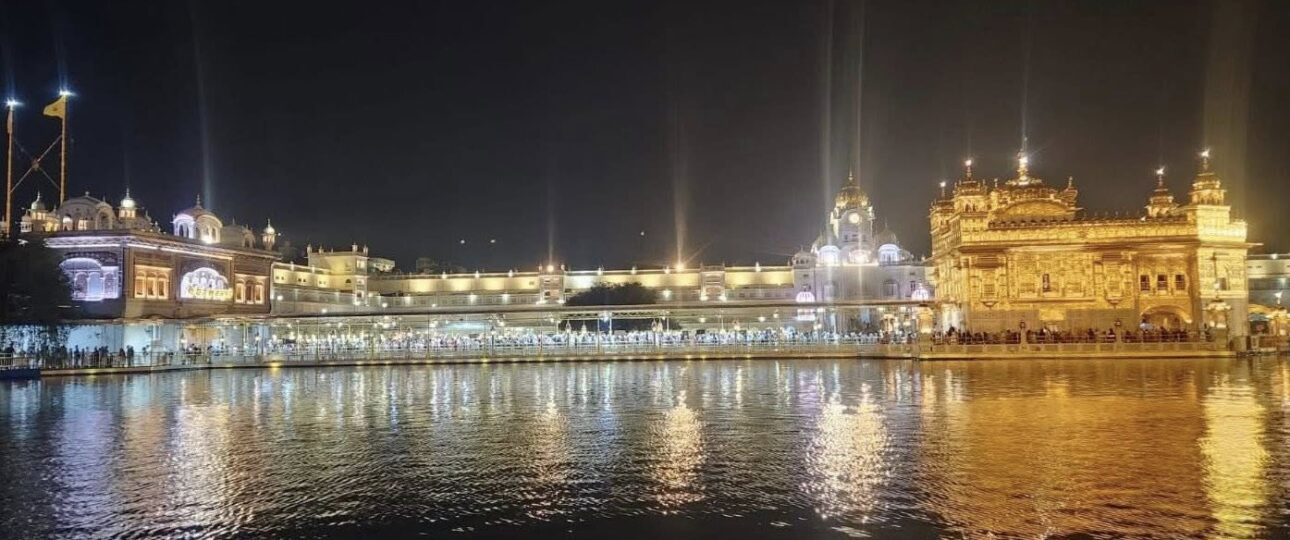
Amritsar is a city that breathes through its layers. To the world, it is the city of the Golden Temple, a spiritual beacon of gold and marble. To others, it is a culinary capital where the scent of melting ghee and kulchas fills the air. But there is a third Amritsar—a city of red brick, wide boulevards, and colonial ghosts.
When the British annexed Punjab in 1849, they didn’t just bring their laws; they brought their longing for home. They built a “Civil Lines” district—a leafy sanctuary of bungalows and steeples designed to replicate the English countryside amidst the heart of the Land of Five Rivers.
Today, the best way to peel back these layers is not from the window of a buzzing car, but from the seat of a silent, sustainable Eco Rickshaw. This is not just a sightseeing trip; it is a slow-motion journey through a century of imperial history.
Why an Eco Rickshaw? The Sustainable Way to Travel
In a city as vibrant and chaotic as Amritsar, the Eco Rickshaw Tour offers a rare moment of “Slow Travel.”
- Eco-Friendly: These battery-operated vehicles produce zero emissions, protecting the very heritage buildings you are visiting from the corrosive effects of pollution.
- The Sensory Experience: Unlike a closed car, the rickshaw allows you to feel the change in temperature as you move from the sun-drenched Old City to the shaded, tree-lined avenues of the Civil Lines. You hear the rustle of ancient Banyan trees and the distant bells of colonial-era churches.
1. The Town Hall
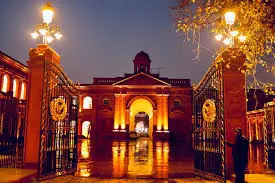
Our tour begins at the majestic Town Hall, the literal and metaphorical bridge between the old Sikh city and the British administration.
Built in 1870, this grand red-brick structure was the nerve center of the British administration. Imagine high-ranking officials in crisp white linens ascending these steps, carrying scrolls that would decide the fate of millions.
The Town Hall is a masterclass in Indo-Saracenic architecture. Look up at the high ceilings designed to trap heat and the wide verandahs that provided shade. The symmetry of the arches reflects the British desire for order in a land they often found “chaotic.”
Today: The Partition Museum
A wing of this building now houses the Partition Museum. It is a poignant experience; you stand within a building built to govern a unified India, now housing the memories of its painful division in 1947.
2. The Deputy Commissioner (DC) Office: The Seat of Power
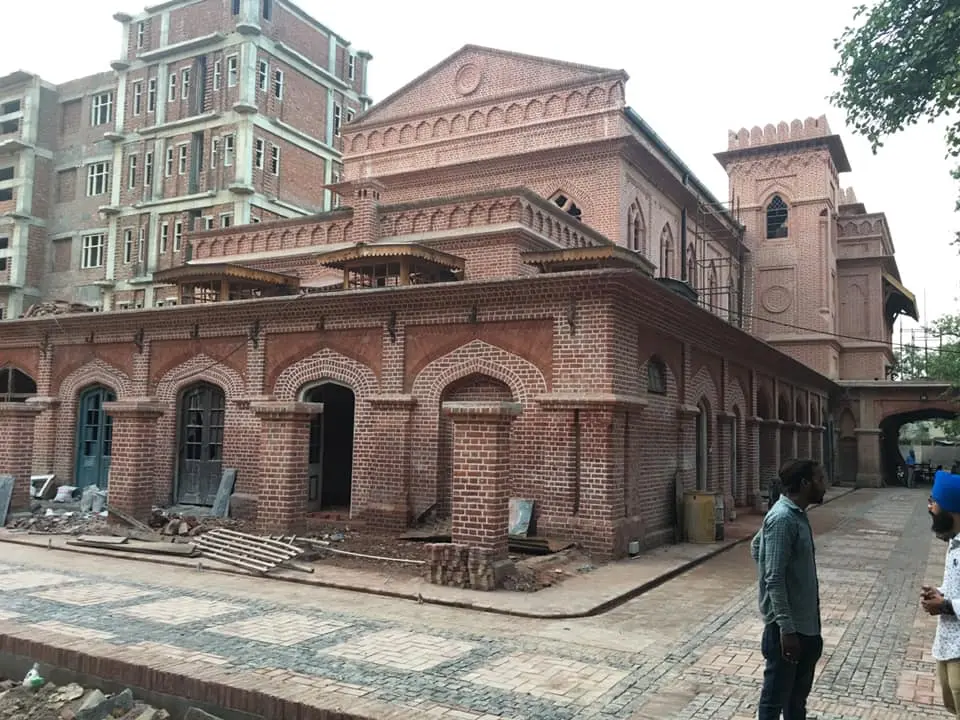
A short, breezy rickshaw ride brings us to the District Courts, where the DC Office Building stands as a silent sentinel of bureaucracy.
Constructed in the 1870s, this building has seen the transition of power firsthand. Inside, there is a legendary Succession Board. It lists every Deputy Commissioner of Amritsar from 1849 to the present day.
- 1849–1947: The list is dominated by British names like Saunders and Davies.
- 1947–Present: The names shift to Indian administrators.
The Experience
As your rickshaw pauses outside, watch the lawyers in black robes and the hustle of modern Indian law. It’s a fascinating contrast to the silent, stoic architecture of the British era that still houses the city’s pulse.
3. The General Post Office (GPO): A 1925 Time Capsule

Communication was the backbone of the British Empire. The Amritsar GPO, built in 1925, was once the most important building for the families of British soldiers stationed in the Punjab.
Unlike the earlier Victorian buildings, the GPO has a more refined, Neoclassical touch. Its massive wooden doors and heavy masonry were meant to convey security. In an era before the internet, this was where the “Dak” (mail) arrived from London, bringing news of home to lonely officers.
4. Victoria Hospital /Amritsar Haat
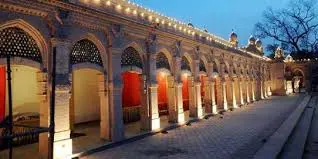
One of the most stunning transformations on this tour is the Victoria Hospital, built in 1900 to commemorate the Diamond Jubilee of Queen Victoria.
For over a century, these halls echoed with the footsteps of doctors and patients. Today, the Government of Punjab has meticulously restored the red-brick facade and transformed it into Amritsar Haat.Here, You will see variety of clothing and textiles.
- Phulkari Textiles: Traditional Punjabi embroidery.
- Artisanal Crafts: Handmade jewelry and woodwork.
- Local Delicacies: A food court serving authentic Amritsari flavors in a colonial setting.
5. St. Paul’s Anglican Church
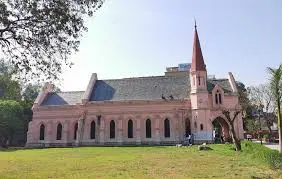
Founded in 1859, St. Paul’s is perhaps the most evocative stop on the tour.
As you step off your Eco Rickshaw, the noise of the city fades. The church is a fine example of Early English Gothic architecture. The masonry is exquisite, with pointed arches and stained glass that filters the harsh Indian sun into a soft, ethereal glow.
On Sundays, the church comes alive. The local Christian community gathers for prayer, maintaining a tradition that has survived for over 160 years. The graveyard nearby holds the stories of British families who lived, loved, and died in this distant corner of the empire.
6. Catholic Church, Ram Bagh

Tucked away in the busy market area near the historic Ram Bagh gardens is the Catholic Church.
While the surrounding markets are a whirlwind of color and sound, the church remains a sanctuary of silence. It was built to serve the Irish and European soldiers of the British Army. Its simple yet sturdy architecture is a reminder of the diverse faiths that have called Amritsar home.
Practical Travel Information
Best Season to Visit
- October to March: The weather is crisp and pleasant, perfect for an open-air rickshaw ride.
- Avoid: June and July, when temperatures can soar above 40°C.
- Duration: 9 to 10 hours hours. You will also visit Golden temple and Beating Retreat Ceremony at Wagha Border .
How to Reach Amritsar
- By Air: Sri Guru Ram Dass Jee International Airport (ATQ) connects to London, Dubai, Singapore, and major Indian cities.
- By Train: Amritsar Junction is well-connected to Delhi by the Shatabdi Express. and Vanda Bharat Express .
Frequently Asked Questions (FAQs)
1. Is the Eco Rickshaw comfortable for seniors? Yes! The rickshaws are low-floor for easy entry and have cushioned seats. The pace is gentle and relaxing.
2. Can we enter all these buildings? Most buildings like the GPO and DC Office are functional government offices, so entry to certain rooms may be restricted, but the exteriors and public halls are accessible. The Town Hall (Partition Museum) and Amritsar Haat are fully open to the public.
Book Your Journey Through Time
The British Architecture Tour by Eco Rickshaw is more than just a history lesson; it’s an emotional bridge between two eras. It’s the sound of a rickshaw bell echoing against 150-year-old bricks, and the sight of a modern city growing around its colonial bones.
Don’t just visit Amritsar—understand it. Experience the grandeur, the struggle, and the beauty of a city that has survived empires.
Ready to explore the hidden side of Amritsar? Send a mail to balwindertourguide222@gmail.com

[…] Punjab’s historic city of Amritsar, a remarkable revival has taken place. The once-forgotten British-era hydropower plant at Tarran Wala Pul, originally built in 1930, has been meticulously restored under the ambitious […]
[…] the holiest shrine in Sikhism. Beyond its religious importance, Amritsar offers a tapestry of historical landmarks, such as Jallianwala Bagh and the Wagah Border, alongside bustling markets and mouthwatering […]
[…] Partition Museum: 600 meters (10 min walk) […]
[…] Temple, Jallianwala Bagh is a solemn, powerful reminder of colonial brutality. In April 1919, British troops opened fire on a peaceful crowd, leaving hundreds dead. Today it’s a memorial garden with […]
[…] Partition Museum is not just a place to learn about history; it’s a space to reflect on the shared heritage of India, Pakistan, and Bangladesh. It’s a powerful reminder of the importance of peace and […]